

Jacksonville, Fl. — The “Buresh Bottom Line”: Always be prepared!.....First Alert Hurricane Survival Guide... City of Jacksonville Preparedness Guide... Georgia Hurricane Guide.
STAY INFORMED: Get the * FREE * First Alert Weather app
FREE NEWS UPDATES, ALERTS: Action News Jax app for Apple | For Android
WATCH “Preparing for the Storm”
WATCH “The Ins & Outs of Hurricane Season”
READ the First Alert Hurricane Center “Survival Guide”
LISTEN & WATCH “Surviving the Storm” - WOKV Radio & Action News Jax
***** ALWAYS CHECK & RE-CHECK THE LATEST FORECAST & UPDATES! *****
REMEMBER WHEN A TROPICAL STORM OR HURRICANE IS APPROACHING: Taping windows is *NOT* helpful & will not keep glass from breaking.
Realize the forecast cone (”cone of uncertainty”) is the average forecast error over a given time - out to 5 days - & *does not* indicate the width of the storm &/or damage that might occur.
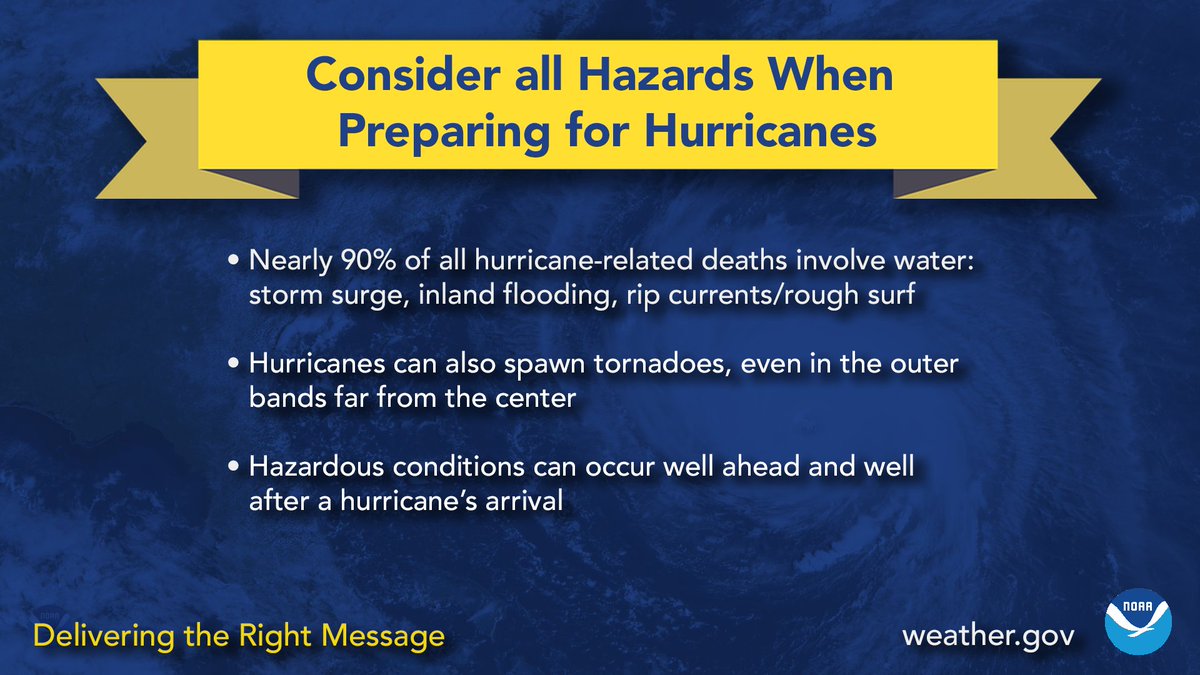
Ian is long gone but....
*** With so much rain & ocean water in the “system”, higher than avg. tides will continue through at least the weekend for the intracoastal, St. Johns River & its tributaries. Minor to moderate - but mostly nuisance-type flooding & ponding will occur with each high tide cycle ***
Ian:
Tropical wave - ‘98-L’ that moved off of Africa last week is moving over the Southern Caribbean & Central Caribbean & was upgraded to tropical depression #9 Friday .... to tropical storm “Ian” Fri. evening... then to a hurricane early Mon. with a landfall over Western Cuba early Tue. as a Cat. 3 hurricane & made landfall southwest of - & near - Ft. Myers Wed. afternoon as an intense Cat. 4 hurricane - the 4th “major” hurricane to hit Florida since 2000 (Charley in ‘04 on the SW coast... Irma in ‘17 in the Keys... Michael in ‘18 in the Panhandle). Ian was declared post-tropical Fri... the last NHC advisory was issued late Sat.
A “blow by blow” of Ian & trying to forecast the hurricane is posted in the “Buresh Blog” - * here *.
Ian formed from a classic from a tropical wave that formed from a complex of intense storms over Africa... encountered hostile conditions (shear & dry air) for days before finding more favorable conditions. Virtually all ingredients were in place for maintaining Ian’s intensity over the SE Gulf. Unfortunately an eyewall replacement cycle was completed overnight resulting in a rapidly intensifying hurricane Wed. upon approach to the southwest coast of Florida.
#HurricaneIan path from tropical depression to tropical storm to hurricane back to tropical storm then hurricane again before final landfall northeast of Charleston, SC. @actionnewsjax @wokvnews #FirstAlertWx pic.twitter.com/XHujOvESws
— Mike Buresh (@MikeFirstAlert) October 1, 2022
Though trending lower than last Fri./Sat, higher than avg. tides will continue to produce mostly nuisance-like ponding/flooding near/at times of high tide along the St. Johns River & its tributaries. Levels will be highest - & most problematic - in Clay/St. Johns & especially Putnam Co. The hydrograph below shows a little recent bump as yet another crest approaches via the very heavy rain in the headwater basin between Orlando & Melbourne northward to Putnam Co.:


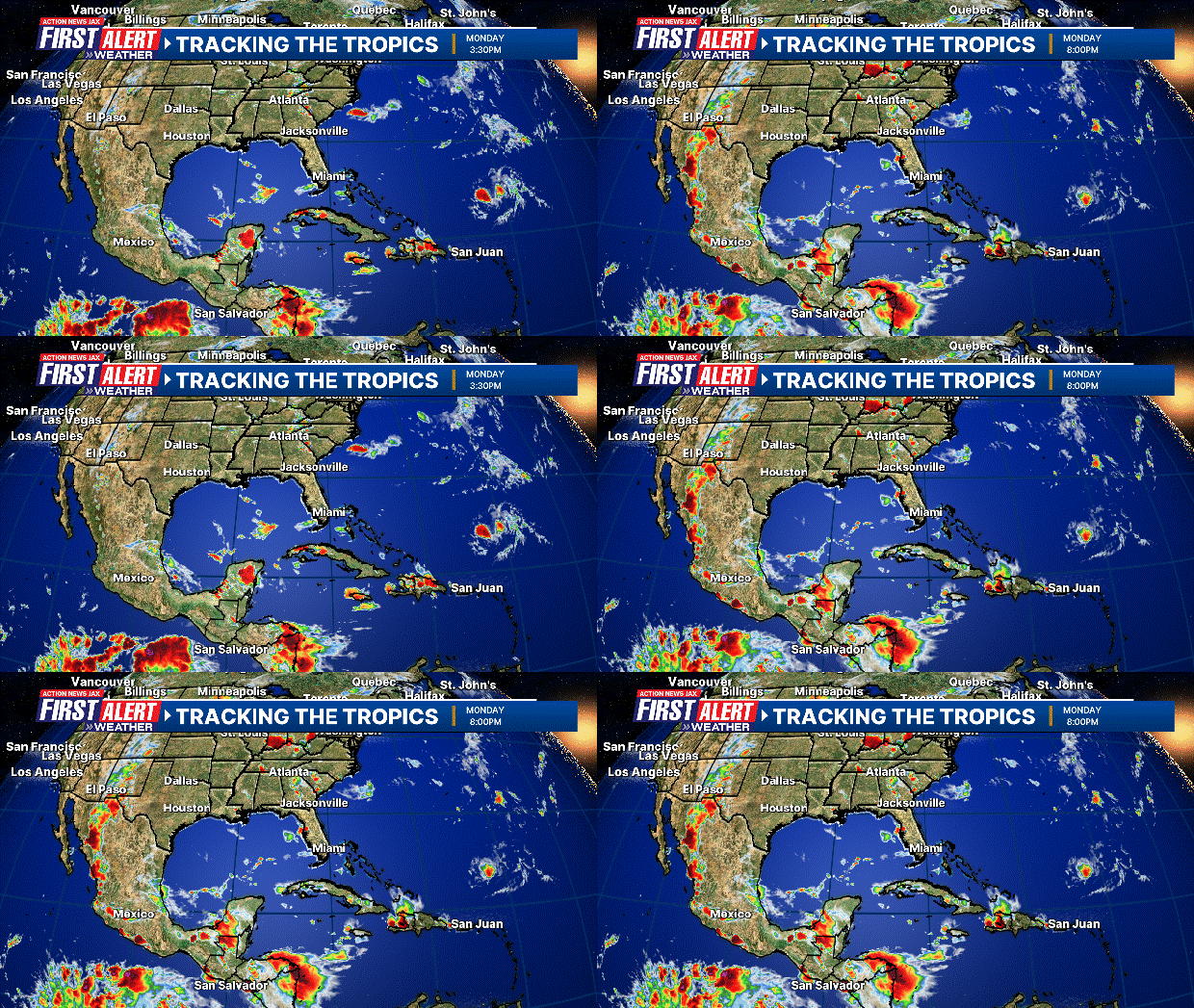

The Atlantic....
A tropical wave is “festering” at a low latitude again (this is where “Ian” tracked *BUT* this time the wave will continue westward vs. turning northward) The disturbance entered the Southeast Caribbean Wed. & continues to hug the S. American coast. Proximity to land + some shear should allow only slow development, if any at all before the wave reaches the Central & especially Western Caribbean through the weekend where conditions look more optimal for strengthening. It looks like a tropical cyclone of some sort will move into Central America over the weekend/early next week. The window for strengthening will be relatively short over the Southwest Caribbean but ‘91-L’ should be able to rather quickly take advantage of very favorable low shear, very warm water & good deal of moisture. *Current* indications are a possible hit on the coasts of Nicaragua &/or Honduras from Sat. night through Sun. night. A lot of troughing (dips in the jet stream) over the U.S. but indications are that this disturbance will stay far enough south so as to not be drawn northward. There will be heavy rain through Fri. for parts of Aruba, the ABC Islands & Northern Venezuela & Colombia gradually diminishing from east to west through early Sat.


A tropical wave over the E. Atlantic is moving northwest & was upgraded to tropical depression #12 Tue. afternoon. #12 will not be able to make it all the way west across the Atlantic. Shear increases through this week so #12 is expected to degenerate into an open surface trough by at least the weekend. There may be a window of opportunity for #12 to try to reorganize next week over the Central Atlantic (but remaining far out to sea) before getting pulled north then northeast mid to late week over the N. Atlantic.


Water vapor loop shows a lot of dry air (dark blue) across the Wester Atlantic Basin:

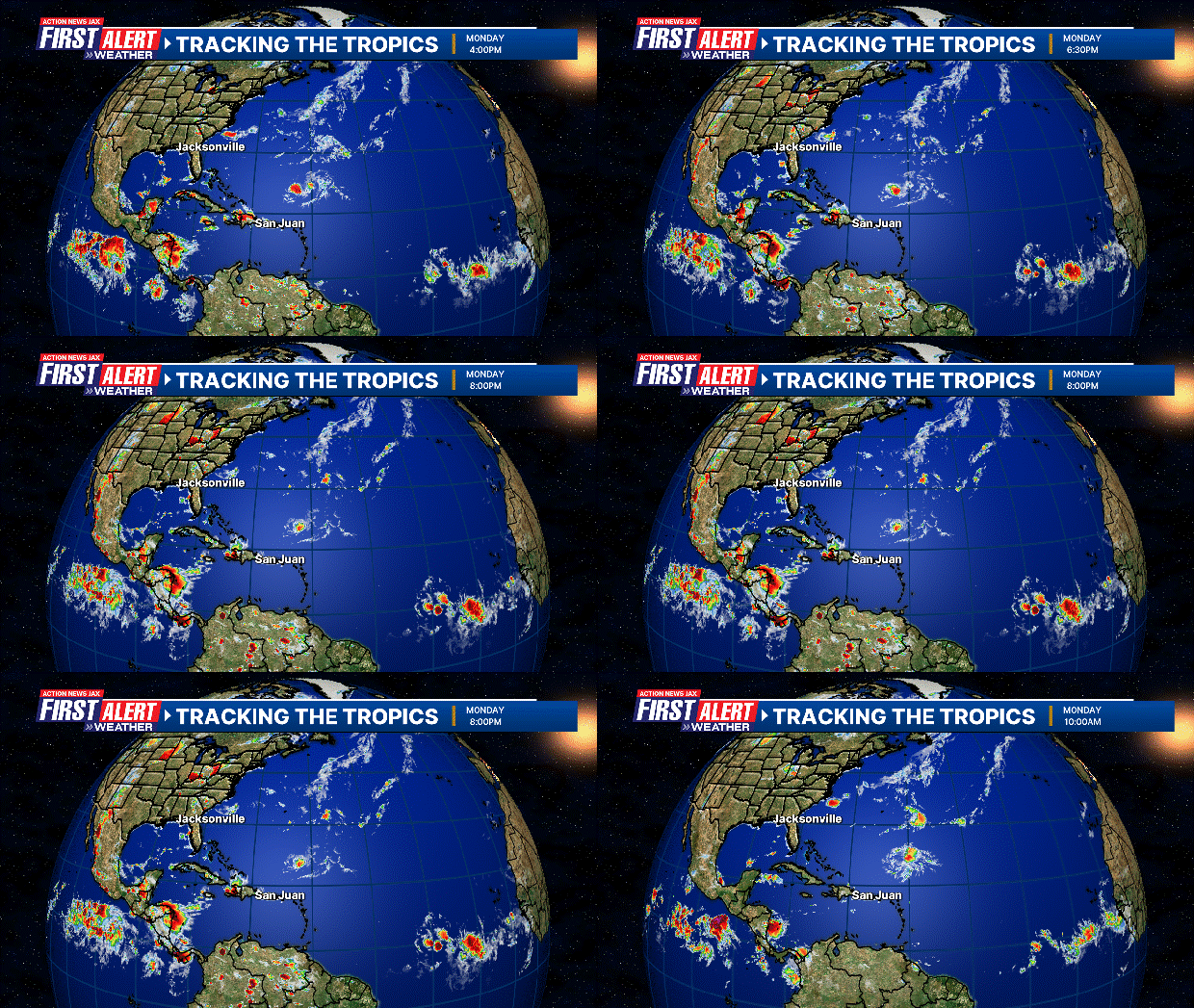
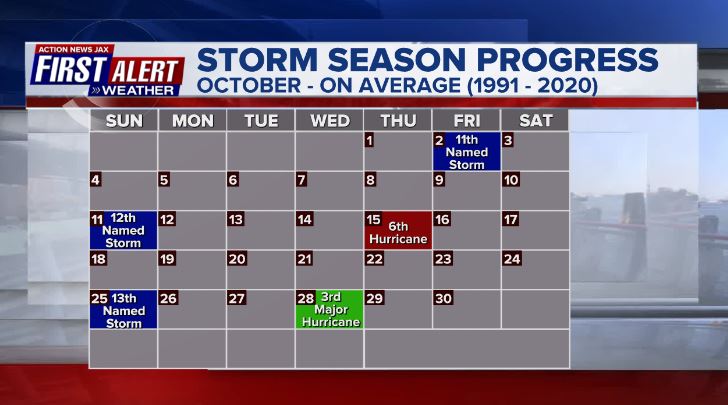
October origins:
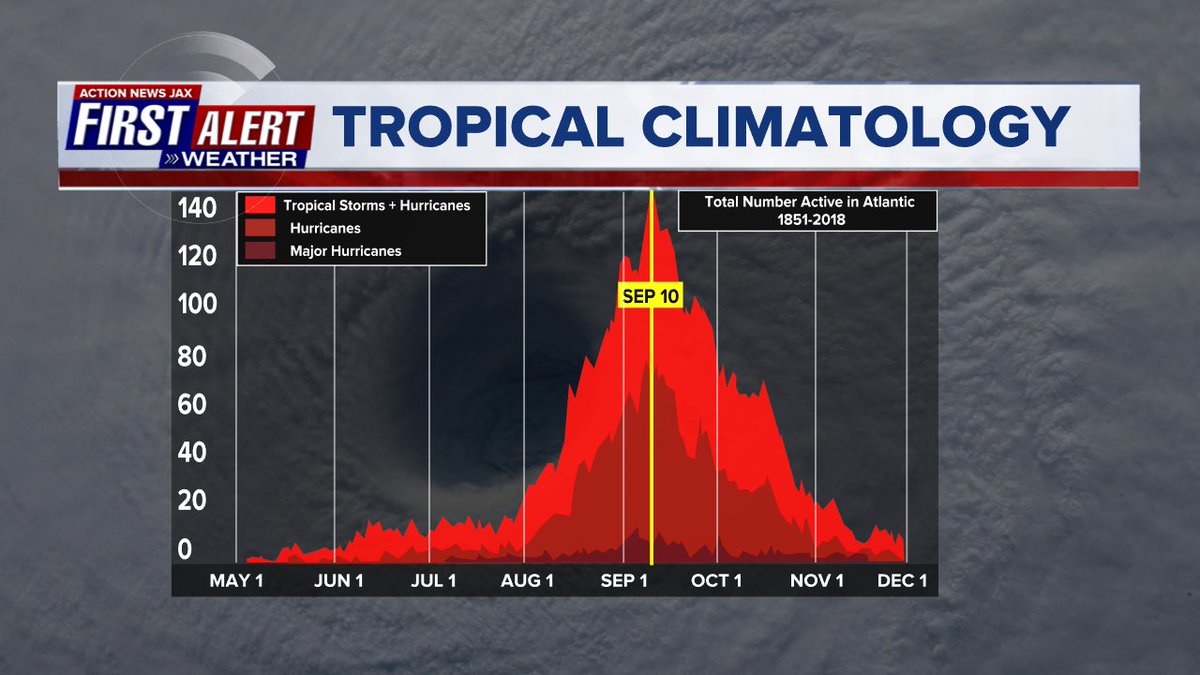
Averages below based on climatology for the Atlantic Basin through September. This season so far is well below avg.:
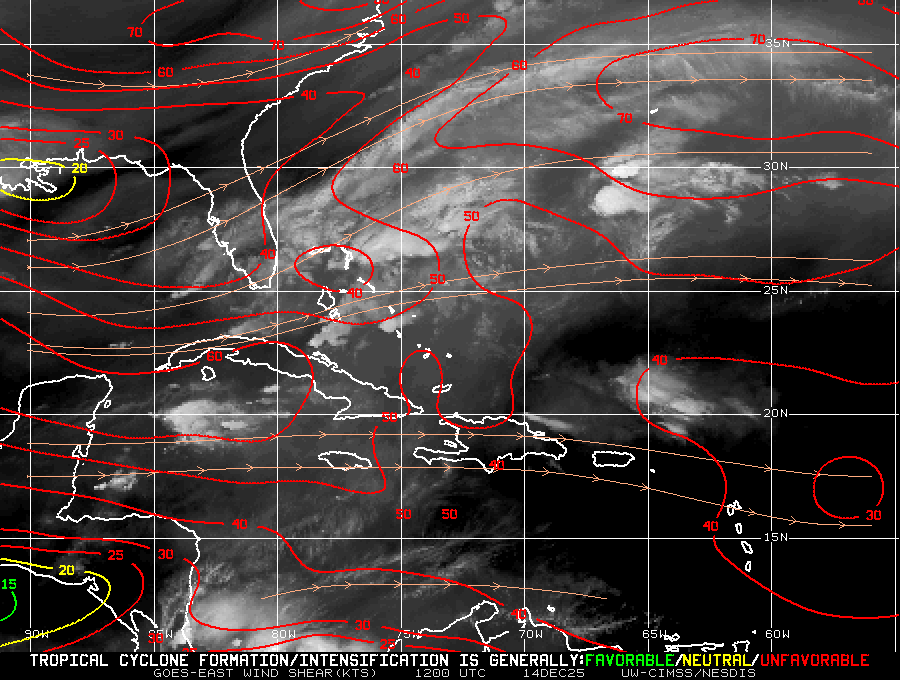
Wind shear:


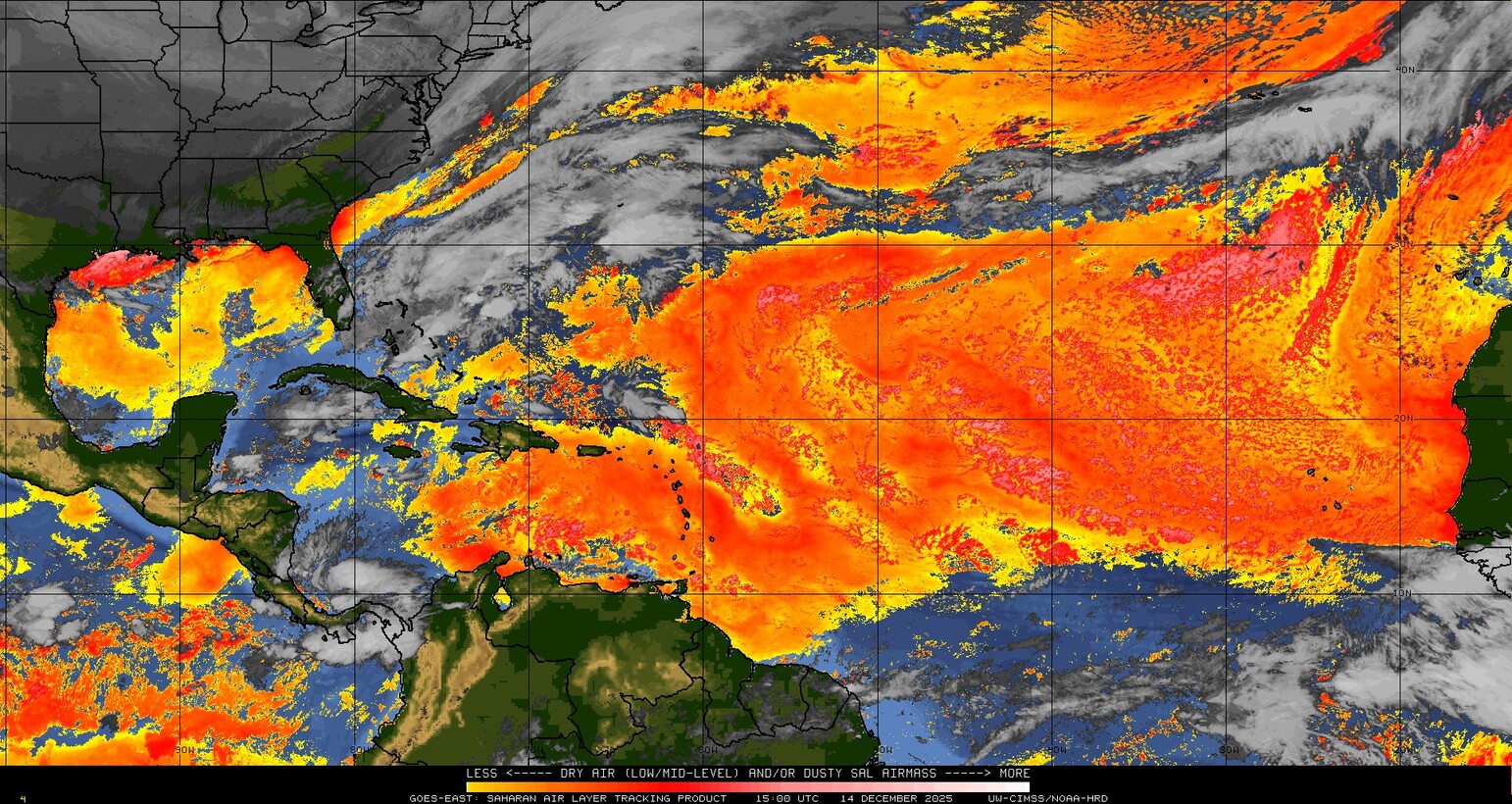
Saharan dust spreads west each year from Africa by the prevailing winds (from east to west over the Atlantic). Dry air - yellow/orange/red/pink. Widespread dust is indicative of dry air that can impede the development of tropical cyclones. However, sometimes “wanna’ be” waves will just wait until they get to the other side of - or away from - the plume then try to develop if other conditions are favorable. In my personal opinion, way too much is made about the presence of Saharan dust & how it relates to tropical cyclones. In any case, we’ve had several large dust plumes spread west to the Caribbean & Gulf with the peak of Saharan dust typically in June & July.
2022 names..... “Julia” is the next name on the Atlantic list (names are picked at random by the World Meteorological Organization... repeat every 6 years). Historic storms are retired [Florence & Michael in ’18... Dorian in ’19 & Laura, Eta & Iota in ‘20 & Ida in ‘21]). In fact, this year’s list of names is rather infamous with “Charley”, “Frances”, “Jeanne” & “Ivan” retired from the ‘04 list (all hit Fl.) & “Matthew” was retired in 2016. The WMO decided - beginning last year - that the Greek alphabet will be no longer used & instead there will be a supplemental list of names if the first list is exhausted (has only happened three times - 2005, 2020 & 2021). The naming of tropical cyclones began on a consistent basis in 1953. More on the history of naming tropical cyclones * here *.

East Atlantic:


Mid & upper level wind shear (enemy of tropical cyclones) analysis (CIMMS). The red lines indicate strong shear:
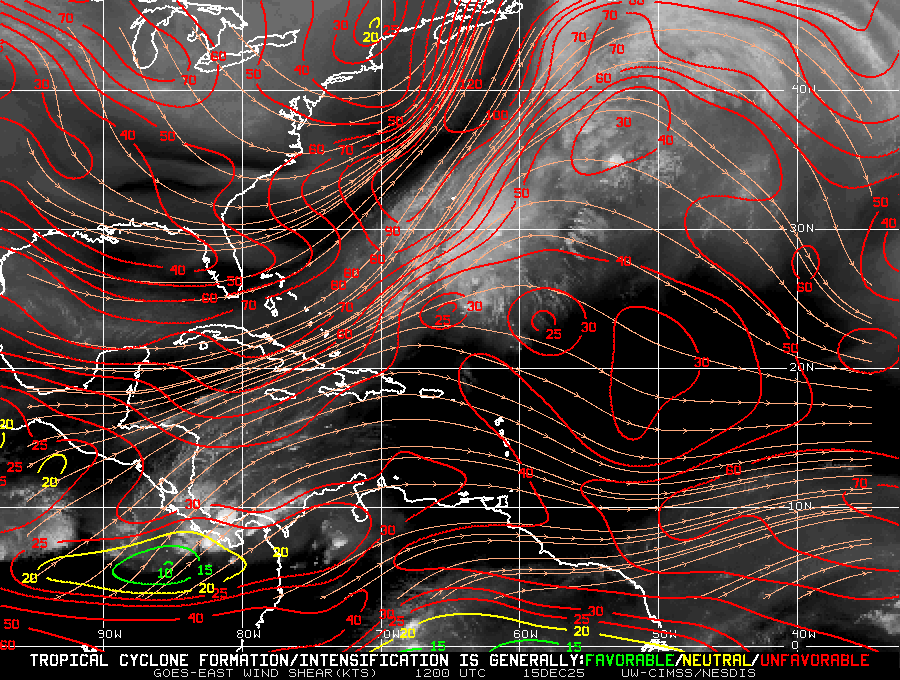
Water vapor imagery (dark blue indicates dry air):

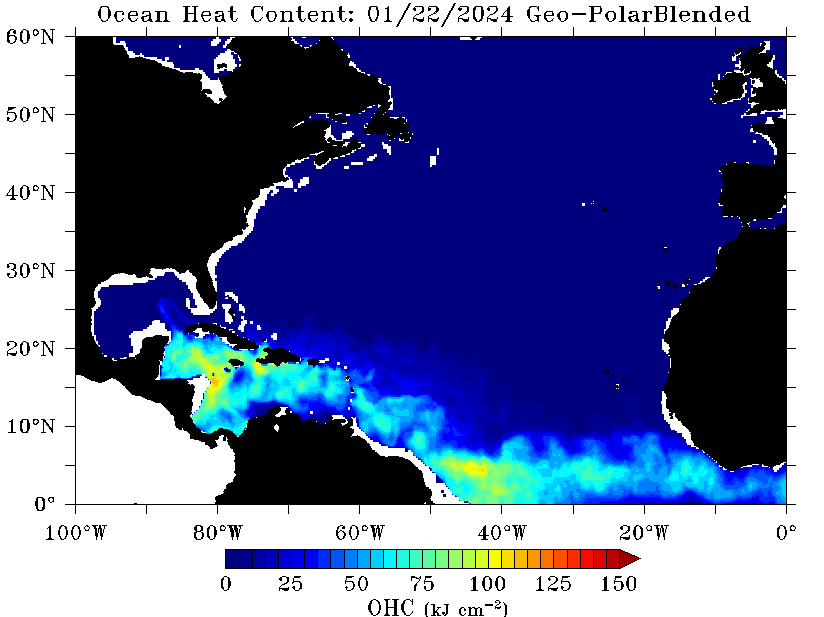
Deep oceanic heat content over the Gulf, Caribbean & deep tropical Atlantic:
Sea surface temp. anomalies:


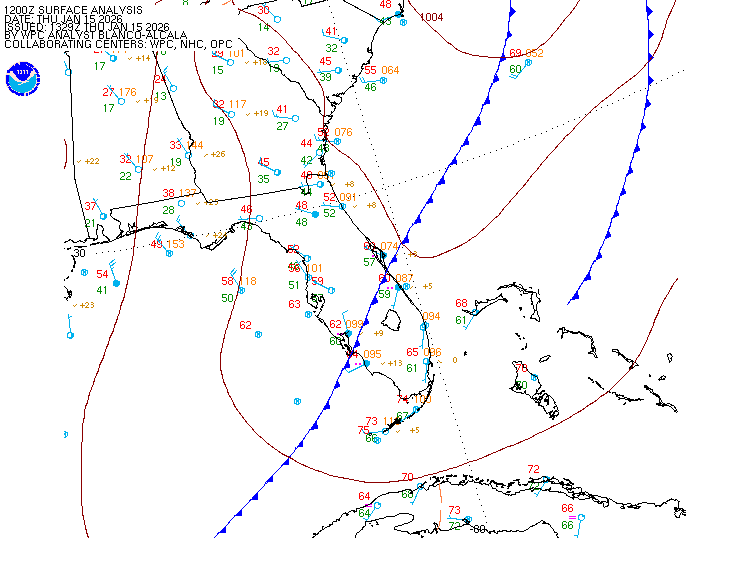
SE U.S. surface map:
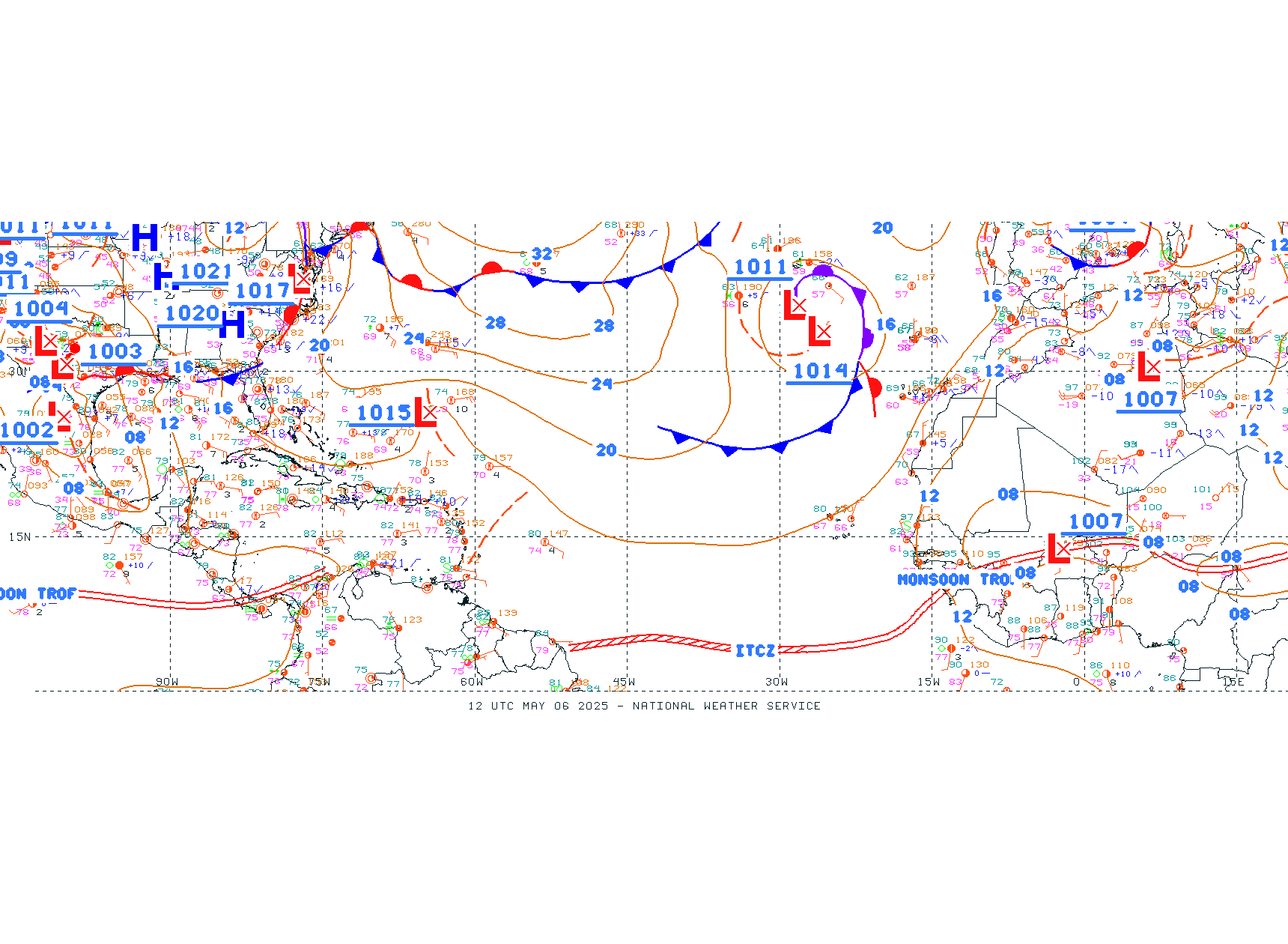
Surface analysis centered on the tropical Atlantic:
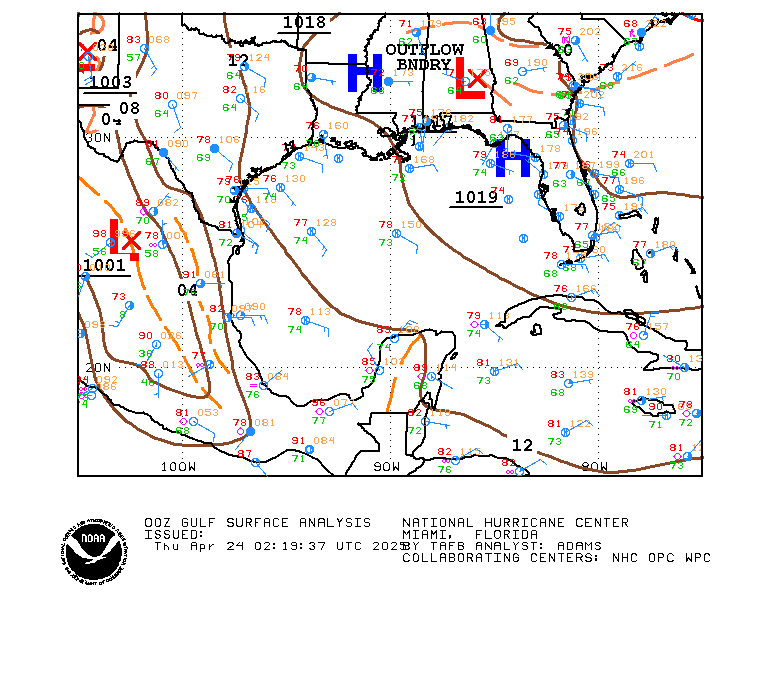
Surface analysis of the Gulf:
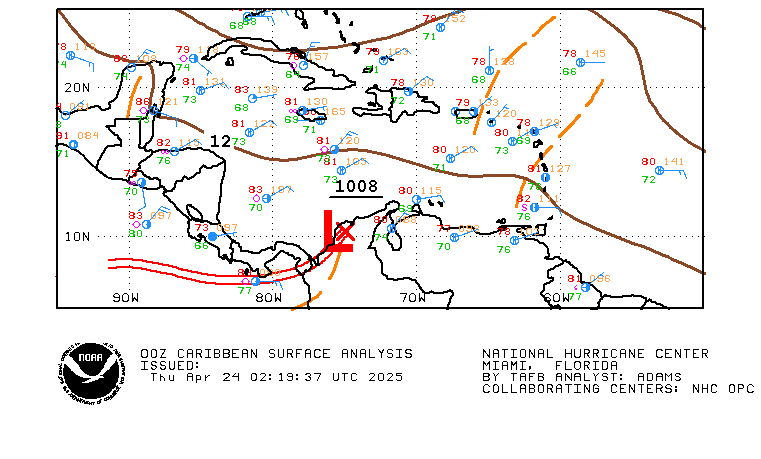
Caribbean:
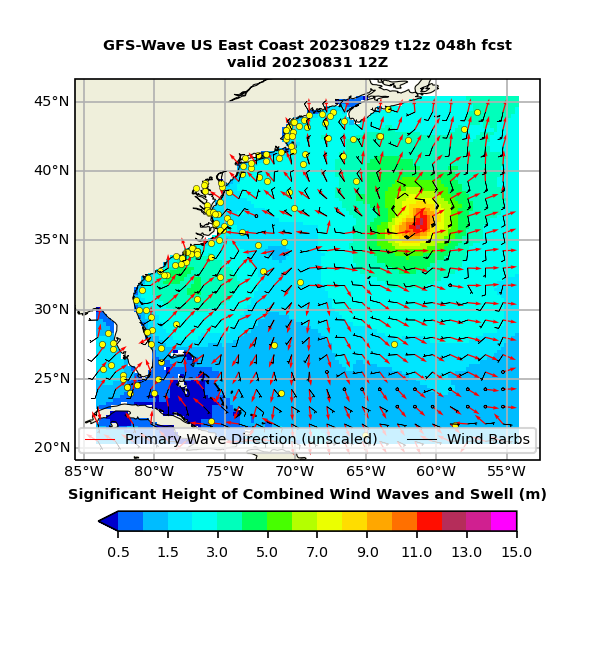
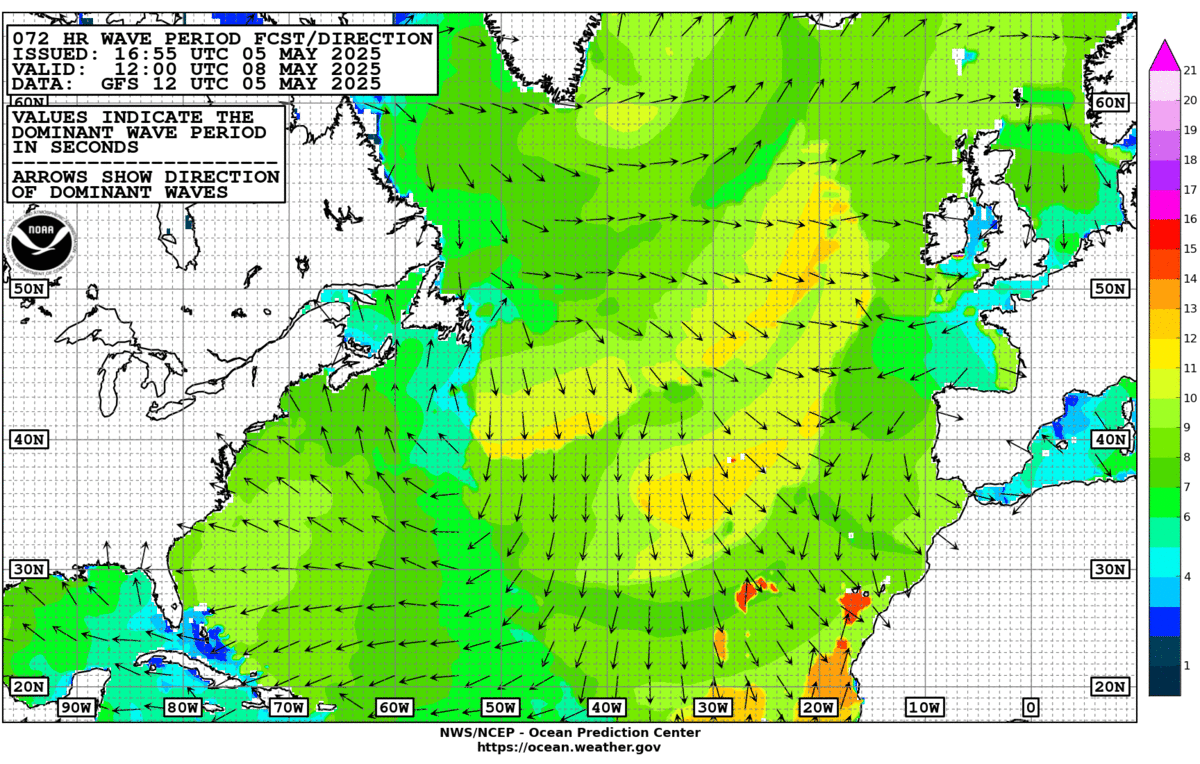
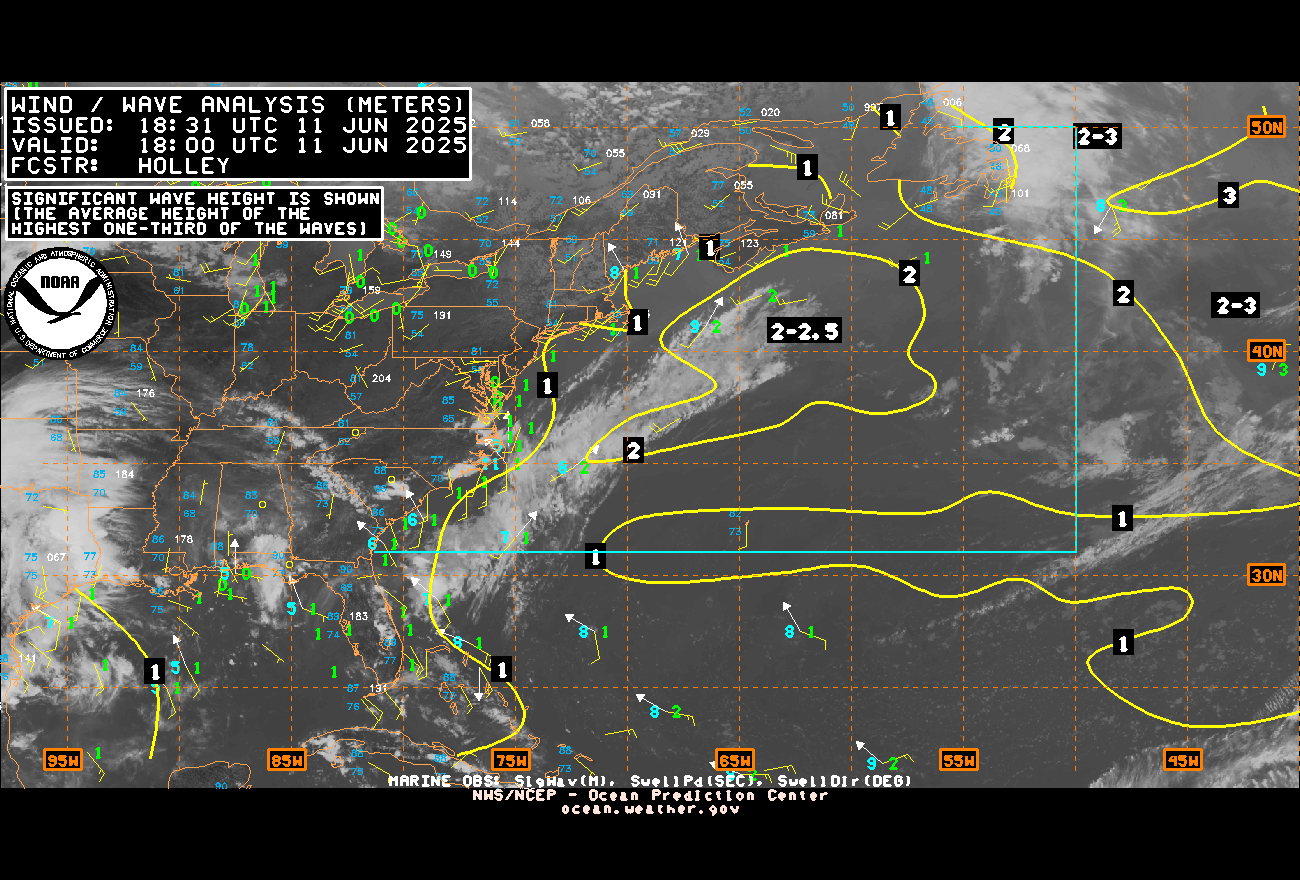
GFS wave forecast at 48 & 72 hours (2 & 3 days):

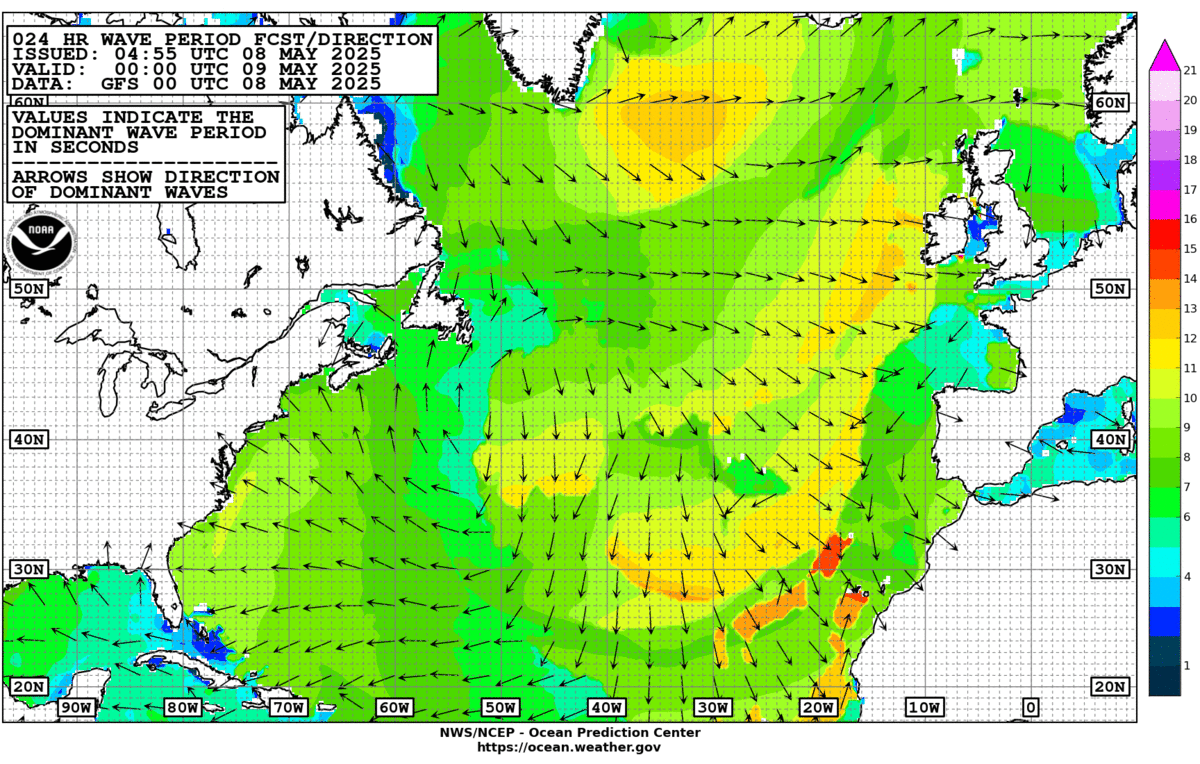
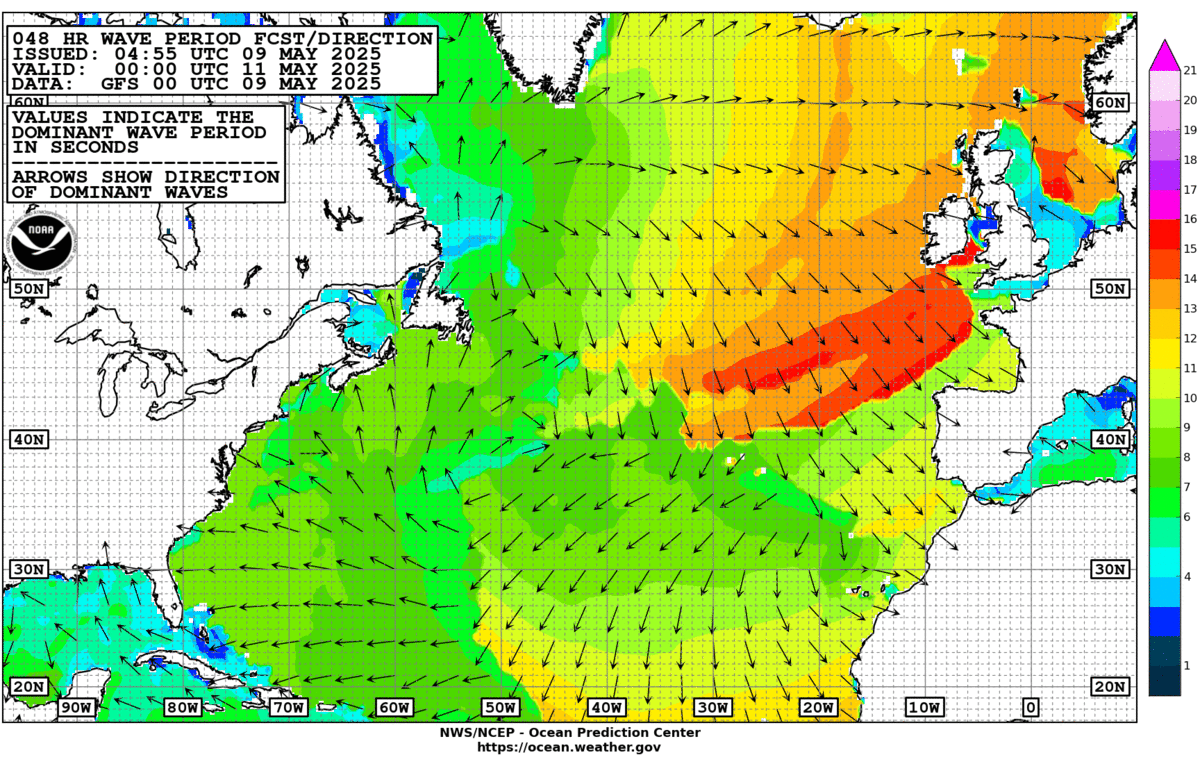
Atlantic Basin wave period forecast for 24, 48 & 72 hours respectively:
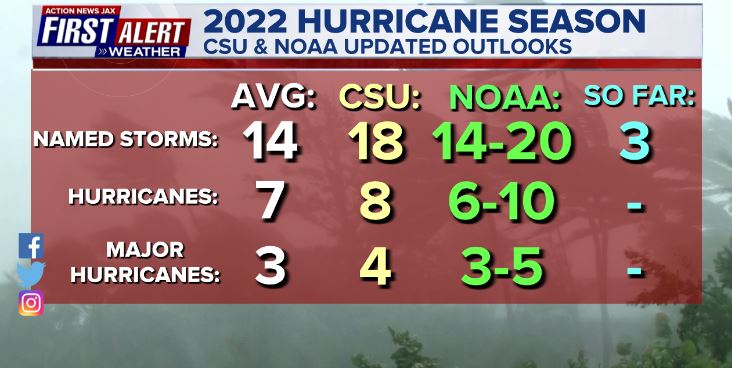
Updated Atlantic seasonal forecast from early Aug. - NOAA & CSU:
The East Pacific:


West Pacific:
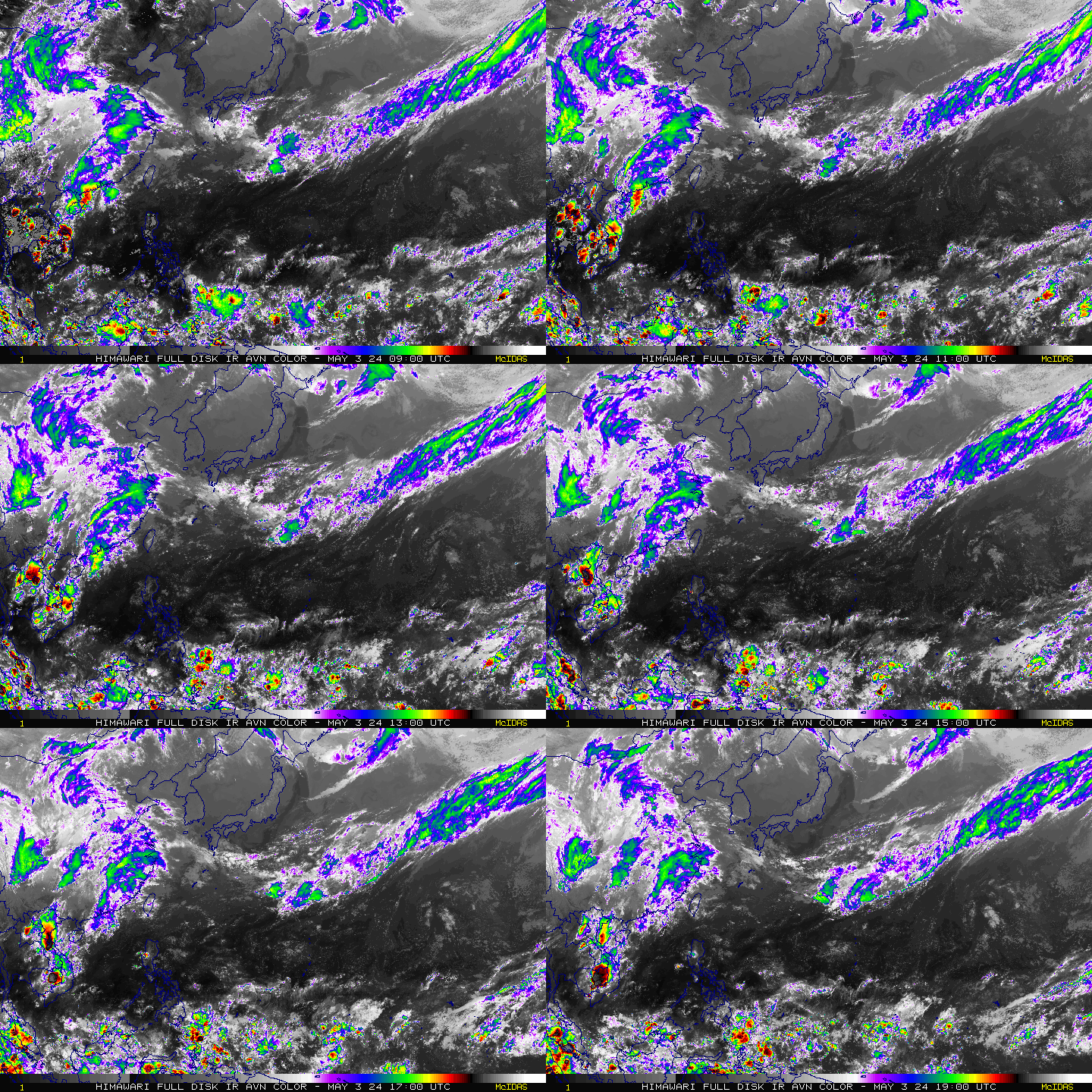
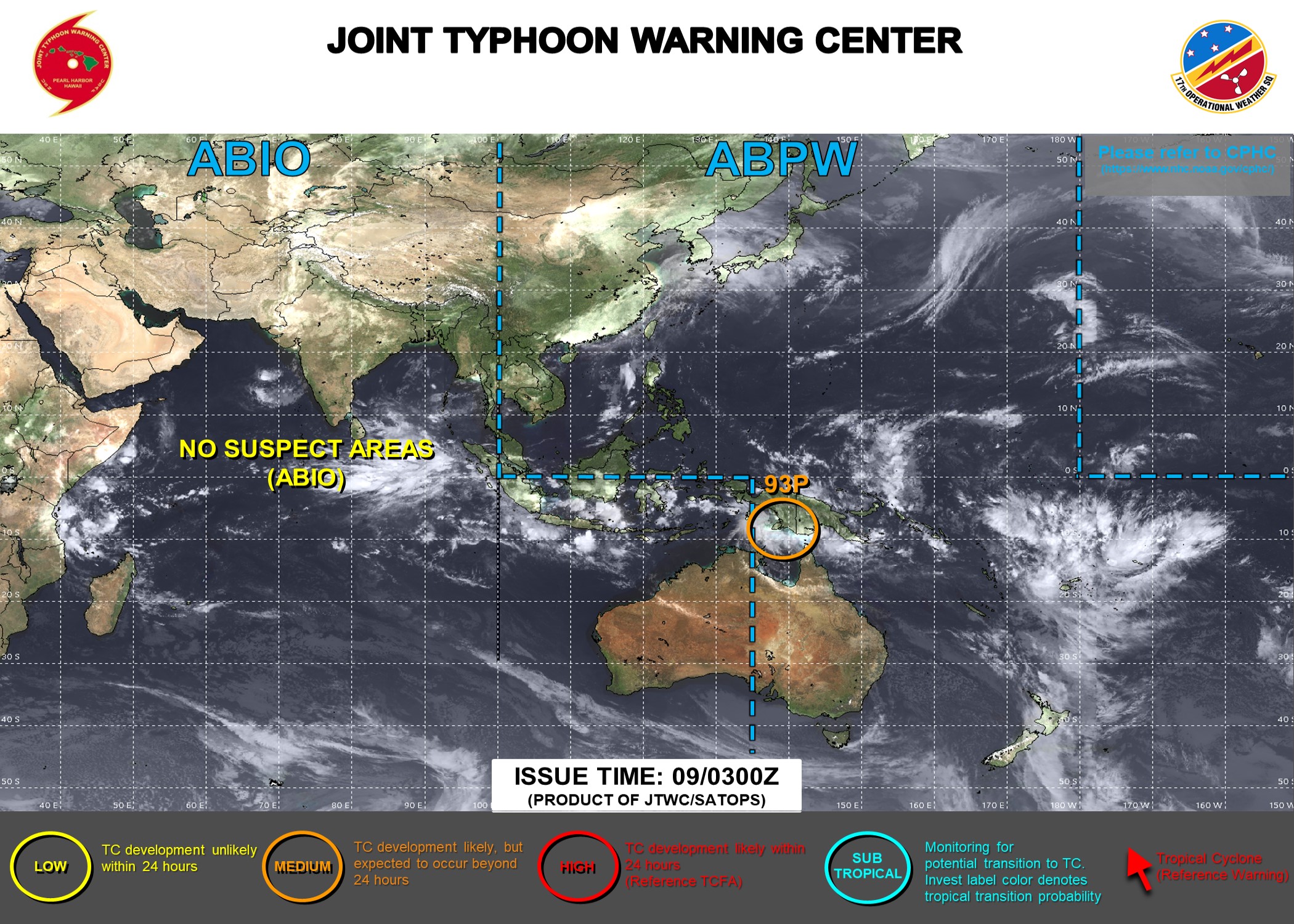
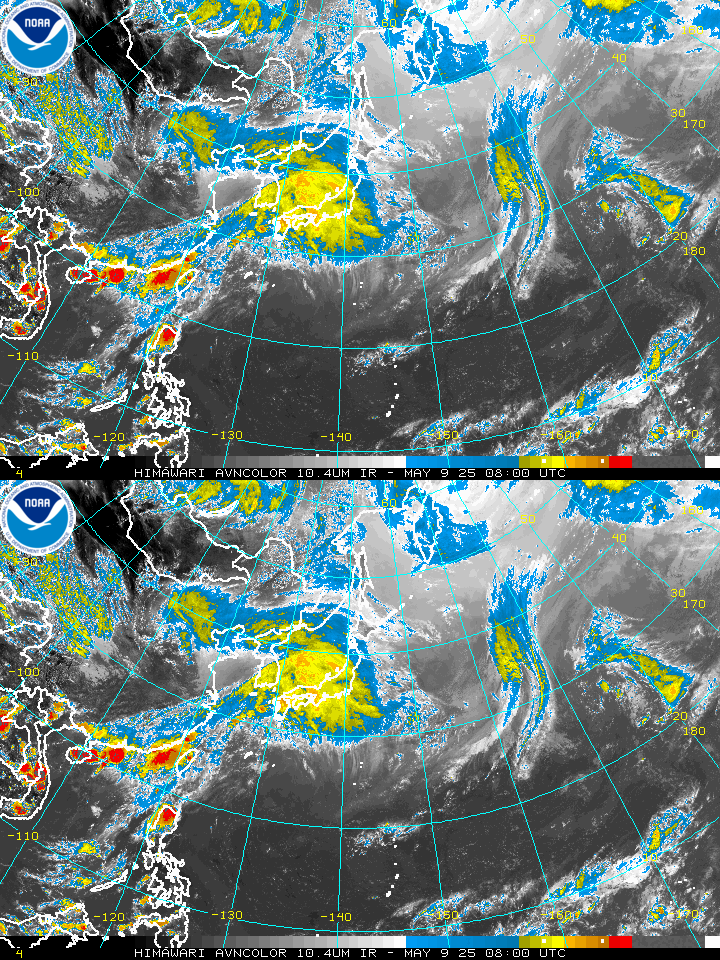
Global tropical activity:

Cox Media Group