
JACKSONVILLE, Fla. — From rescued manatees preparing to return to the wild to one of the zoo’s most popular fall events, there is plenty happening at the Jacksonville Zoo and Botanical Gardens this summer.
During In Depth with Kristine Bellino, Wildlife Wanderer Curtis Dvorak and Interpretive Specialist Emily Gmitter shared updates on the zoo’s conservation work, upcoming events, and introduced viewers to one of the zoo’s ambassador animals.
Brew at the Zoo and summer savings
If you’ve been thinking about visiting the zoo, there are still a few ways to save money before summer ends.
Dvorak said the zoo recently hosted another popular $10 Tuesday, with one discounted day still left this summer. Visitors can also take advantage of the Endless Summer Pass, which lets guests buy one regular admission ticket and come back as many times as they want through Sept. 30. The pass can be purchased through early September.
He also reminded visitors that Brew at the Zoo returns on Sept. 12, and anyone planning to attend should buy tickets before Aug. 1 to lock in early bird pricing. Dvorak said the event has continued to grow each year and is expected to be close to selling out again.
Manatees continue making progress
The zoo also shared good news about its manatee rehabilitation program.
One rescued manatee, Alpine, has already been released back into the wild in Crystal River after reaching a healthy weight.
Another manatee, Cullen, is still gaining weight before he can be released. Emily Gmitter said Cullen currently weighs about 600 pounds and will likely need to reach around 700 pounds before he’s ready. The rehabilitation team feeds the manatees hundreds of pounds of lettuce every day to help them recover.
A third manatee, Francesco, is also making steady progress and could be ready for release in the coming months.
Gmitter said watching the animals return to the wild is one of the most rewarding parts of her job, even though it’s bittersweet to say goodbye after caring for them. She also encouraged visitors to check out the zoo’s behind-the-scenes tours to learn more about the rehabilitation process.
Why slowing down on the water matters
The manatee exhibit isn’t just about rehabilitation it’s also about education.
Dvorak said he hopes visitors leave with a better understanding of why no-wake zones exist and why slowing down on the water is so important. He said more than 90% of the manatees the zoo helps rescue are recovering from boat strikes.
He shared how seeing manatees up close years ago changed the way he operates a boat, and he hopes others have the same experience after visiting the exhibit.
If someone believes a manatee is injured or in distress, Gmitter said they should contact the Florida Fish and Wildlife Conservation Commission (FWC), which has the equipment and personnel to respond to rescues.
Don’t worry... they’re just sleeping
One funny question zoo staff hear almost every day is whether the manatees at the exhibit are real.
Because manatees often rest motionless on the bottom of the habitat, visitors sometimes mistake them for statues.
Gmitter explained that’s completely normal. Manatees are generally active during the day but take short naps throughout the day, surfacing for a breath before heading back down to rest.
Meet Samwise, the blue-tongued skink
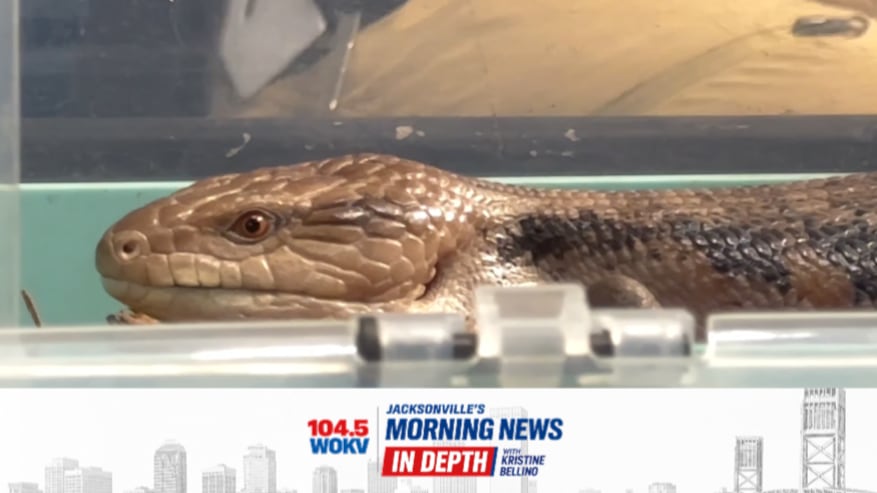
The pair also introduced viewers to Samwise, a 9-year-old blue-tongued skink who serves as one of the zoo’s ambassador animals.
Born at the North Carolina Zoo, Samwise regularly visits schools, presentations and community events to help educate people about reptiles. Her name and another skink named Pippin was inspired by The Lord of the Rings.
Gmitter explained that while skinks are a type of lizard, blue-tongued skinks are much larger than the small skinks people commonly see in Florida yards. Samwise is more than a foot long and, while not venomous, has a strong bite.
Her bright blue tongue helps scare away predators by making them think she’s dangerous even though she’s harmless.
Think before buying an exotic pet
Blue-tongued skinks are popular pets, but Gmitter said many owners don’t realize they can live 15 to 20 years.
Some owners eventually release them into the wild when they become too much to care for, which can create problems for Florida’s native wildlife. Released animals compete with native species for food and habitat.
She encouraged anyone considering an exotic pet to research the animal carefully and understand the long-term commitment before bringing one home.
If someone spots a non-native reptile in the wild, Gmitter recommends contacting FWC, which can safely capture and relocate the animal if needed.
Protecting Florida’s wildlife
The conversation also highlighted a few simple ways people can help protect wildlife across Northeast Florida.
Gmitter said gopher tortoises are one of the area’s most important protected species because their burrows provide shelter for dozens of other animals. She encouraged homeowners and contractors to check for tortoise burrows before digging or beginning construction projects.
She also reminded beachgoers to stay on designated walkways instead of walking across sand dunes, where gopher tortoises often live.
Dvorak added another important reminder: if you stop to help a turtle crossing the road, always move it in the direction it was already traveling. Otherwise, the turtle will simply turn around and try crossing the road again.
Dinosauria is ending soon
Families still have a little time left to visit Dinosauria, the zoo’s traveling dinosaur exhibit, before it wraps up on Aug. 2.
After the exhibit leaves, zoo staff will begin preparing for another fan favorite, Spooktacular.
When asked about their favorite annual events, both Dvorak and Gmitter picked Brew at the Zoo, with Dvorak also highlighting ExZOOberation because visitors get to enjoy food and drinks while exploring the zoo after hours.
Gmitter also looked back on this year’s Cattoos for Conservation, which featured Robert Irwin. Both guests said Irwin’s passion for conservation left a lasting impression on visitors and reflected the zoo’s mission of inspiring people to care about wildlife.
A zoo membership pays off quickly
Before wrapping up, Dvorak reminded viewers that a Jacksonville Zoo membership pays for itself after about three visits and gives families unlimited opportunities to experience the zoo throughout the year.
“It’s one of the best values we offer,” he said, encouraging frequent visitors to consider becoming members.
▶ Listen to Jacksonville’s Morning News Interviews
[ Read more local news from WOKV ]
Click here to download our free news, weather and traffic app. And click here to subscribe to our daily 3 Big Things newsletter.



©2026 Cox Media Group