
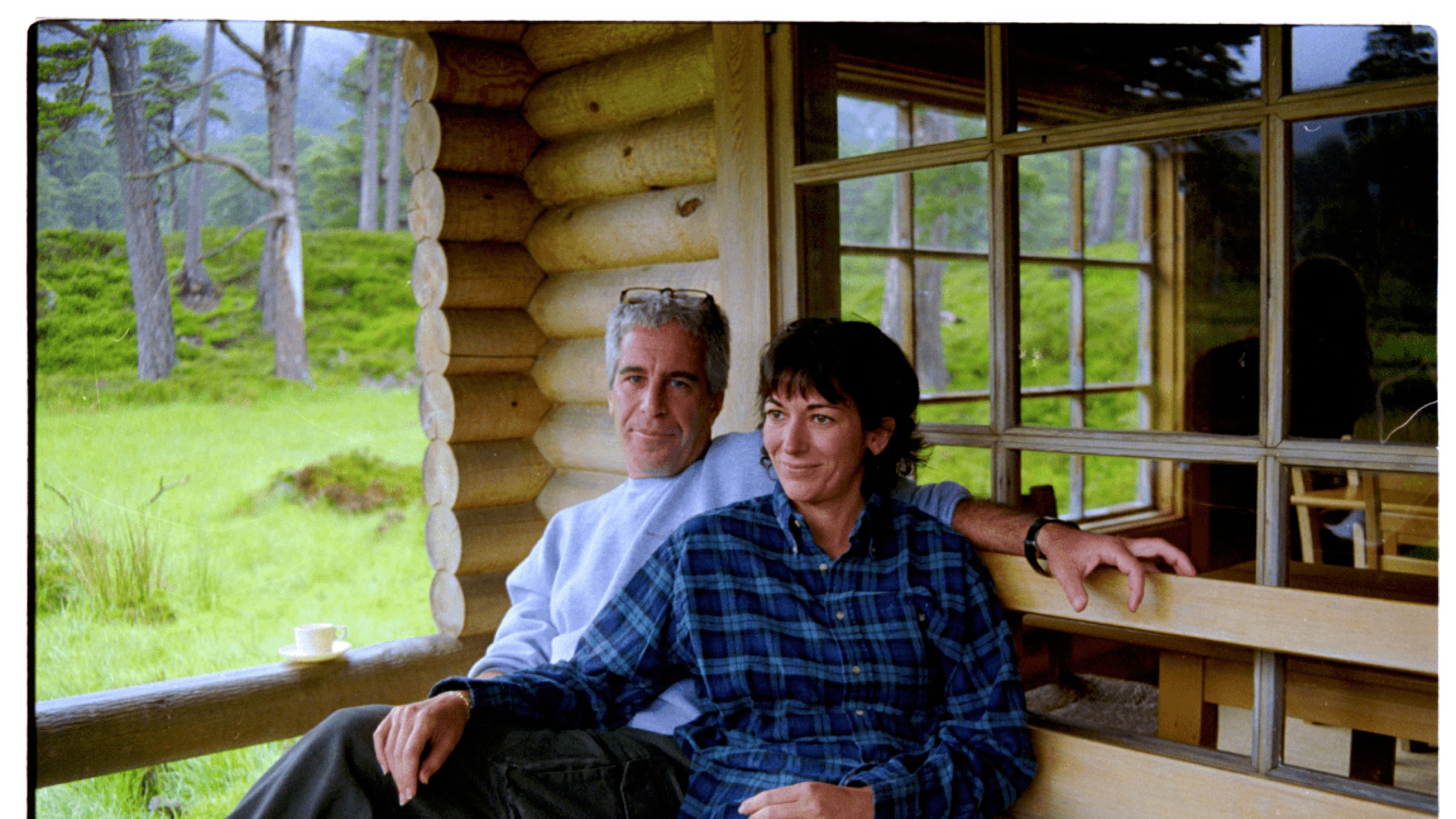
NEW YORK — A judge on Monday scolded Jeffrey Epstein's longtime confidant Ghislaine Maxwell for including confidential victim names in court papers seeking to set aside her 2021 sex trafficking conviction and free her from a 20-year prison sentence.
Judge Paul A. Engelmayer said exhibits included with Maxwell’s habeas petition — which she filed on her own, without a lawyer — will be kept under seal and out of public view “until they have been reviewed and appropriately redacted to protect the identities of victims.”
Any future papers Maxwell files must be submitted under seal, the judge wrote.
He said he “reminds Maxwell, in strong terms, that she is prohibited from including in any public filings any information identifying victim(s) who were not publicly identified by name during her trial.”
A message seeking comment was left with Maxwell's lawyer, David Markus.
Maxwell filed the petition last Wednesday, two days before the Justice Department started releasing investigative records pertaining to her and Epstein in accordance with the recently enacted Epstein Files Transparency Act.
Maxwell contends that information that would have resulted in her exoneration was withheld and that false testimony was presented to the jury. She said the cumulative effect of the constitutional violations resulted in a “complete miscarriage of justice.”
Engelmayer said Maxwell has until Feb. 17, 2026, to notify him whether she plans to include any information from the so-called Epstein files in her petition and must file an amended version by March 31, 2026.
A slow, heavily redacted release of files
Protecting victim identifies has been a key sticking point in the Justice Department’s ongoing release.
The department has said it plans to release records on a rolling basis by the end of the year, blaming the delay on the time-consuming process of obscuring victims’ names and other identifying information. So far, the department hasn’t given any notice when new records arrive.
That approach angered some accusers and members of Congress who fought to pass the transparency act. Records that were released, including photographs, interview transcripts, call logs, court records and other documents, were either already public or heavily blacked out, and many lacked necessary context.
The Senate’s top Democrat on Monday urged colleagues to take legal action over the incremental and heavily redacted release.
Minority Leader Chuck Schumer introduced a resolution that, if passed, would direct the Senate to file or join lawsuits aimed at forcing the Justice Department to comply with the Epstein Files Transparency Act, the law enacted last month that required disclosure of records by last Friday.
“Instead of transparency, the Trump administration released a tiny fraction of the files and blacked out massive portions of what little they provided,” Schumer, D-N.Y. said in a statement. “This is a blatant cover-up.”
In lieu of Republican support, Schumer’s resolution is largely symbolic. The Senate is off until Jan. 5, more than two weeks after the deadline. Even then, it’ll likely face an uphill battle for passage. But it allows Democrats to continue a pressure campaign for disclosure that Republicans had hoped to put behind them.
There were few revelations in the tens of thousands of pages of records that have been released so far. Some of the most eagerly awaited records, such as FBI victim interviews and internal memos shedding light on charging decisions, weren’t there.
Nor were there any mentions of some powerful figures who’ve been in Epstein’s orbit, like Britain’s former Prince Andrew.
Some files removed, then restored
Deputy Attorney General Todd Blanche on Sunday defended the Justice Department's decision to release just a fraction of the files by the deadline as necessary to protect survivors of sexual abuse by the disgraced financier.
Blanche pledged that the Trump administration would meet its obligation required by law. But he stressed that the department was obligated to act with caution as it goes about making public thousands of documents that can include sensitive information. And he said legal precedent had long established that obligations to protect the privacy of victims permit authorities to go beyond deadlines to ensure they are protected.
Blanche, the Justice Department's second-in-command, also defended its decision to remove several files related to the case from its public webpage, including a photograph showing Trump, less than a day after they were posted.
The missing files, which were available Friday but no longer accessible by Saturday, included images of paintings depicting nude women, and one showed a series of photographs along a credenza and in drawers. In that image, inside a drawer among other photos, was a photograph of Trump alongside Epstein, Melania Trump and Epstein’s longtime associate, Ghislaine Maxwell.
Blanche said the documents were removed because of a concern that they might also show victims of Epstein. Blanche said the Trump photo and the other documents would be reposted once redactions, if necessary, were made to protect survivors.
The Trump photograph was returned to the public webpage without alterations Sunday after it was determined that a concern by some government workers that victims may have been depicted in the picture proved unfounded, the Justice Department said.
“We are not redacting information around President Trump, around any other individual involved with Mr. Epstein, and that narrative, which is not based on fact at all, is completely false,” Blanche told NBC’s “Meet the Press.”
Blanche said Trump, a Republican, has labeled the Epstein matter “a hoax” because “there’s this narrative out there that the Department of Justice is hiding and protecting information about him, which is completely false.”
“The Epstein files existed for years and years and years and you did not hear a peep out of a single Democrat for the past four years and yet ... lo and behold, all of a sudden, out of the blue, Senator Schumer suddenly cares about the Epstein files,” Blanche said. “That’s the hoax.”
___
Associated Press reporter Kevin Freking in Washington contributed to this report.
Copyright 2025 The Associated Press. All rights reserved. This material may not be published, broadcast, rewritten or redistributed without permission.